
China imposed new restrictions on the sale of chip-making materials to the US, a day after the Biden administration imposed sanctions. China has imposed new restrictions on the sale of critical semiconductor materials to the United States, a move that comes just a day after the Biden administration announced new sanctions.
According to an official announcement by China’s Ministry of Commerce on Tuesday, the country will stop selling gallium, germanium, antimony and other key minerals with potential military applications to the US, citing national security concerns. In addition, it will intensify control over toner exports.
The move comes in response to new rules introduced by the US Commerce Department on Monday aimed at “further limiting” China’s ability to produce semiconductors for artificial intelligence and weapons systems. As US Commerce Secretary Gina Raimondo said in an official statement,
This action is the culmination of a targeted approach by the Biden-Harris administration, working with our allies, to limit the ability of the People’s Republic of China to become independent in production of advanced technologies that endanger our national security.
In particular, from September it began restricting exports of antimony – a mineral used to make chips and military equipment – and later began demanding detailed explanations from exporters about how the materials are used in Western supply chains.
The Chinese Commerce Ministry announced the move after the Washington expanded its list of Chinese companies subject to export controls on computer chip-making equipment, software and high-bandwidth memory chips. Such chips are needed for advanced applications.
The ratcheting up of trade restrictions comes as President-elect Donald Trump has been threatening to sharply raise tariffs on imports from China and other countries, potentially intensifying simmering tensions over trade and technology.
China’s Foreign Ministry also issued a vehement reproof.
“China has lodged stern protests with the U.S. for its update of the semiconductor export control measures, sanctions against Chinese companies, and malicious suppression of China’s technological progress,” Lin Jian, a Chinese Foreign Ministry spokesperson, said in a routine briefing Tuesday.
I want to reiterate that China firmly opposes the U.S. overstretching the concept of national security, abuse of export control measures, and illegal unilateral sanctions and long-arm jurisdiction against Chinese companies,” Lin said.
The minerals sourced in China are used in computer chips, cars and other products
China said in July 2023 it would require exporters to apply for licenses to send to the U.S. the strategically important materials such as gallium and germanium. In August, the Chinese Commerce Ministry said it would restrict exports of antimony, which is used in a wide range of products from batteries to weapons, and impose tighter controls on exports of graphite.
Such minerals are considered critical for national security. China is a major producer of antimony, which is used in flame retardants, batteries, night-vision goggles and nuclear weapon production, according to a 2021 U.S. International Trade Commission report.
The limits announced by Beijing on Tuesday also include exports of super-hard materials, such as diamonds and other synthetic materials that are not compressible and extremely dense. They are used in many industrial areas such as cutting tools, disc brakes and protective coatings. The licensing requirements that China announced in August also covered smelting and separation technology and machinery and other items related to such super-hard materials.
China is the biggest global source of gallium and germanium, which are produced in small amounts but are needed to make computer chips for mobile phones, cars and other products, as well as solar panels and military technology.
China says it’s protecting itself from US trade restrictions
After the U.S. side announced it was adding 140 companies to a so-called “entity list” subject to strict export controls, China’s Commerce Ministry protested and said it would act to protect China’s “rights and interests.” Nearly all of the companies affected by Washington’s latest trade restrictions are based in China, though some are Chinese-owned businesses in Japan, South Korea and Singapore.
Both governments say their respective export controls are needed for national security.
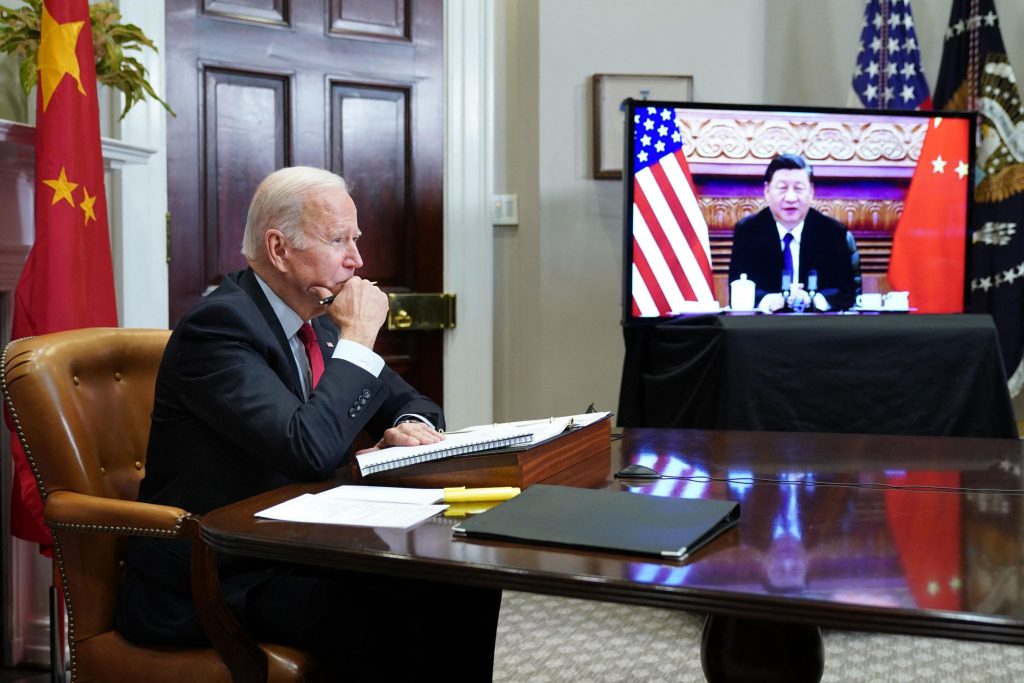
China’s government has been frustrated by U.S. curbs on access to advanced processor chips and other technology on security grounds but had been cautious in retaliating, possibly to avoid disrupting China’s fledgling developers of chips, artificial intelligence and other technology.
Various Chinese industry associations issued statements protesting the U.S. move to limit access to advanced chip-making technology.
The China Association of Automobile Manufacturers said it opposes the use of national security as a basis for export controls, “the abuse of export control measures and the malicious blockade and repression of China.
Such behavior seriously violates the laws of the market economy and the principle of fair competition, undermines the international economic and trade order, disrupts the stability of the global industrial chain, and ultimately harms the interests of all countries,” it said in a statement.
The China Semiconductor Industry Association issued a similar statement, adding that such restrictions were disrupting supply chains and inflating costs for American companies.
U.S. chip products are no longer safe and reliable. China’s related industries will have to be cautious in purchasing U.S. chips,” it said.
The U.S. gets about half its supply of both gallium and germanium metals directly from China, according to the U.S. Geological Survey. China exported about 23 metric tons (25 tons) of gallium in 2022 and produces about 600 metric tons (660 tons) of germanium per year.
The U.S. has deposits of such minerals but has not been mining them, though some projects underway are exploring ways to tap those resources.
0 Comments