
Intel CEO Pat Gelsinger publicly described NVIDIA’s success in the Artificial Intelligence industry as “pure luck”. In an interview at a Massachusetts Institute of Technology (MIT) event, the Intel CEO told attendees that his NVIDIA counterpart, Jensen Huang, “got extremely lucky” and shortly thereafter expressed his complaint about the Intel’s abandonment of ‘Larrabee’, a project that in his view could have put the company in an advantageous position in today’s AI market.
After the interview went public, NVIDIA VP of Applied Deep Learning Research Bryan Catanzaro dismissed Pat Gelsinger’s claims about the “status quo” in the AI hardware industry in a post on X, saying that the Intel had neither the “vision” nor the will to “execute” to succeed with its previous initiatives.
At minute 17 of the video you can see below, Daniela Rus, a professor in the Department of Electrical Engineering and Computer Science and director of the Computer Science and Artificial Intelligence Laboratory (CSAIL) at MIT, asked Pat Gelsinger, “What is Intel doing for the development of artificial intelligence hardware and how do you see this as a competitive advantage?” Pat Gelsinger responded starting with Intel’s mistakes. According to Intel’s CEO, the company’s capabilities took a nosedive when he left but is now back on the rise.
He also referred to the decade (and more) he spent in… exile (at EMC and later VMWare) as well as the sad fate of the “Larrabee” project. “When they fired me from Intel 13 years ago, they also killed the project that was going to change the shape of artificial intelligence,” said Pat Gelsinger, referring to the termination of Larrabee’s development. At the same time, Pat Gelsinger characterizes Jensen Huang as a hard worker whose primary goal was to advance graphics but who lucked out when AI acceleration became a sought-after feature on today’s computers.
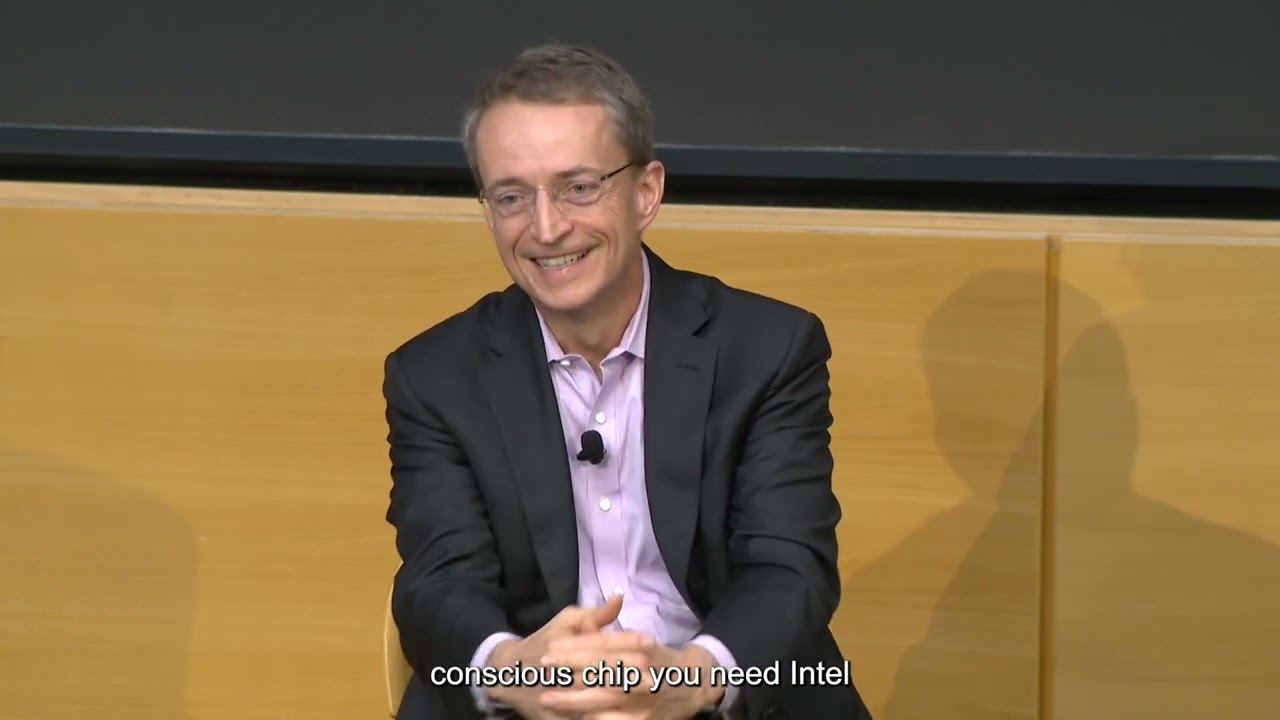
Jensen Huang,” said Pat Gelsinger, “worked extremely hard to master the computational throughput, mostly for graphics at first, and then got extremely lucky.” And then he backed up his point by saying that when the first AI sprouts were emerging, NVIDIA “didn’t even want to support the first AI projects.” Then, after expressing his dismay at the fate of “Larrabee” or any similar development push from Intel, Pat Gelsinger explained that NVIDIA’s dominance came in part from the fact that “Intel basically didn’t do anything in this sector for 15 years”, however, he clarified that now the company will make its presence felt in this area. In addition to developing hardware to accelerate AI applications, Pat Gelsinger is most interested in what he calls the “number one strategy” for Intel, “the democratization of AI.” Developing new hardware alone is “not the answer,” said Pat Gelsinger, as he says it’s also vital to “eliminate proprietary technologies like CUDA.”
In the not-too-distant future, Intel’s CEO sees this democratizing power as bringing high-performance hardware for AI to every machine, from home PCs to developers, businesses and super-powerful servers. What’s also of particular interest is that Pat Gelsinger estimates that thanks in large part to Artificial Intelligence, we’re on the cusp of “a period of pure innovation that could last up to two decades.” He also estimates that we will be able to get AI to leverage resources far beyond the large but rather simple datasets used today (with large language models). At the same time, Intel, as he said, will make sure to “build many factories to create even more computing” to meet the needs of the artificial intelligence market. As soon as the interview went public, NVIDIA VP of Applied Deep Learning Research Bryan Catanzaro dismissed Pat Gelsinger’s “luck” reasoning. “I worked at Intel on applications for Larrabee in 2007.

Then I went to NVIDIA to work on machine learning in 2008. So in that time I’ve been in both places, so I can make my point: NVIDIA’s dominance didn’t come from by chance. It came about because he had a vision and the will to execute it. Something Intel didn’t have.
0 Comments