
AMD’s AM4 socket for CPUs has had a long life. It was first introduced in 2016 and quickly became AMD’s socket for its new Ryzen chips in 2017. It also wasn’t updated until the Ryzen 7000 in 2022, meaning several generations of Ryzen chips used the exact same socket. Not only that, but AMD has also pledged to keep it alive even after AM5 comes out.
The company announced, as part of CES 2024, a series of new AM4 chips and new Ryzen 8000 APUs for desktop users. First, after launching the new Ryzen 8000 series processors in laptops, AMD decided to expand the series to desktops with new APUs. However, there’s not much to say here – the Ryzen 8000 is one of AMD’s least exciting mid-gen refreshes to date. Like their laptop counterparts, the Ryzen 8000 APUs still use the same Zen 4 architecture as the Ryzen 7000, and the actual silicon inside them isn’t all that different from the older chips either, with the only major difference being the addition of a dedicated NPU.
AMD hasn’t launched desktop APUs that belong to the Ryzen 7000 series. AMD’s APUs have integrated graphics in conjunction with the CPUs, and these chips come with up to a Radeon 780M inside. If you’re not looking for integrated graphics, you might be better off with an older Ryzen 7000 or 7000X3D chip. The Ryzen 7 8700G, the more powerful chip of the two, has 8 cores and 16 threads as well as 24MB of cache, a top clock speed of 5.1 GHz and a price tag of $329. Meanwhile, what’s perhaps more interesting is the fact that AMD is keeping the AM4 chip alive with new Ryzen 5000 series chips.
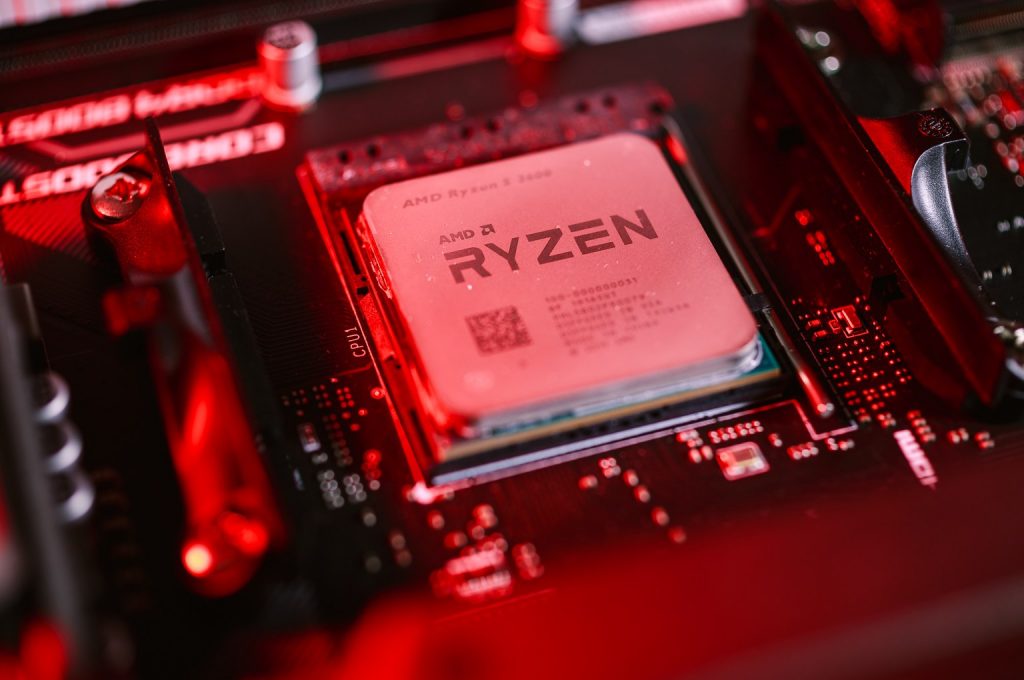
The company is launching the Ryzen 7 5700X3D, a slightly weaker version of the excellent Ryzen 7 5800X3D that launches with 100MB cache . We also have the Ryzen 7 5700, a non-X version of the Ryzen 7 5700X, and the Ryzen 5 5600GT and 5500GT, two lower-powered APUs with six cores and 12 threads. All these chips are based on the older Zen 3 architecture, which was the last one supported by AM4. Still, the fact that AMD released a new socket in 2016 and is still releasing new chips using it in 2024, even when it’s considered “obsolete,” is remarkable in itself. It should also give current AM5 users confidence that their motherboards will likely be good for new chips for years to come, compared to companies like Intel who tend to switch sockets every couple of generations.
The new AMD Ryzen 5000 CPUs and APUs will be available starting January 31, with prices ranging from $125 for the Ryzen 5 5500GT to $249 for the Ryzen 7 5700X3D. Ryzen 8000 APUs, on the other hand, will be released on the same date and will start at $179 for the Ryzen 5 8500G, with the Ryzen 7 8700G reaching $329 – there’s also an entry-level Ryzen 3 8300G with four cores and eight threads, but the price for it has not yet been revealed.
0 Comments