
Xiaomi, the Chinese company mostly synonymous with affordable smartphones, is now trying to make even more noise with its first electric car.
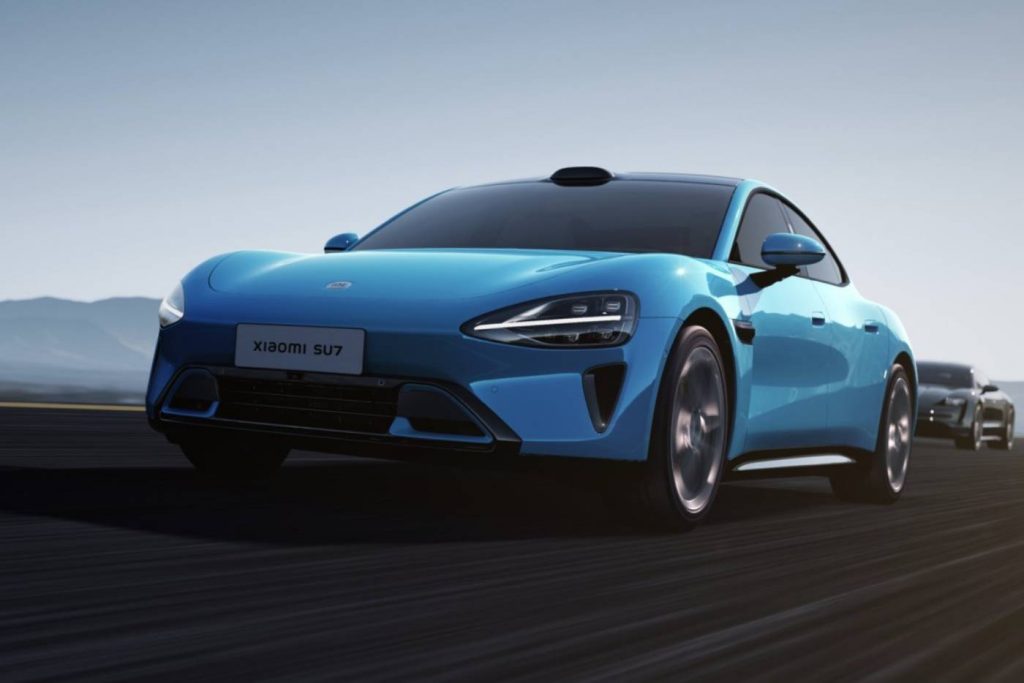
Unveiled earlier today at an event in Beijing, the Xiaomi SU7 – pronounced “soo-chee” in Chinese – is a sedan based on the company’s own Modena Architecture with HyperEngine electric motors revving up to 21,000rpm, as well as a sealed chassis of the casting machines with a clamping force of 9,100 tons – obviously surpassing that of Tesla.
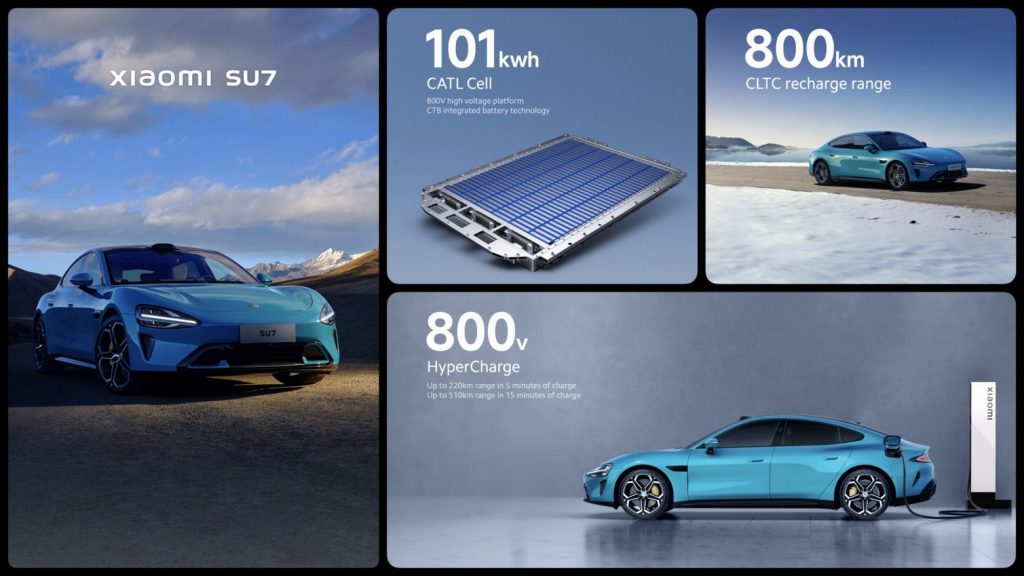
The range will be available in two versions: the SU7 Max with dual engine and all-wheel drive and the SU7 with single engine and rear-wheel drive. It will be a few more months before Xiaomi announces pricing, but it already claims the SU7 Max has a range of up to 800km (497 miles? according to the China Light Vehicle Test Cycle, or CLTC), as well as 0-100km/h acceleration in just 2.78s, which apparently beats both the Tesla Model S and Porsche’s Taycan Turbo. This is partly due to battery manufacturer CATL’s 101kWh 800V high-voltage platform, which offers a range of 220km in just 5 minutes of charging, or 390km in 10 minutes, or 510km in 15 minutes.
The base model, however, only supports 400V charging for the smaller 73.6kWh battery, which has a range of up to 668km or 415 miles. To the above impressive technical characteristics – which remains to be seen if they will be confirmed – comes the announcement by Xiaomi that in 2025 a version of its electric car with a range of 1200 kilometers will be released.
Just as Xiaomi hinted earlier this month, the SU7 offers a HyperOS in-car infotainment system, which is powered by Qualcomm’s Snapdragon 8295 processor and takes just 1.49 seconds to activate. Through it you can access the media, adjust your seats or even control Xiaomi devices through the 16.1″ inch central screen (3K resolution).
Optionally, the car owner can also install Xiaomi Pads, the company’s tablets which can be placed in magnetic ports (with power up to 22.5W) behind the two front headrests. The center screen UI allows for up to three split windows for multitasking, and you can even transfer your Xiaomi smartphones screen to it for a seamless experience. As for music and video entertainment, the whole experience is completed with the 23 internal Dolby Atmos speakers. Lei also mentioned the opening of the Xiaomi CarIOT ecosystem to third parties, with one example being a smart child car seat that can remind you if their seat belt is not fastened. The executive added that even iPhone users can take advantage of some of Xiaomi’s in-car features, with support for wireless CarPlay and AirPlay connectivity, as well as iPad placement for rear passengers.
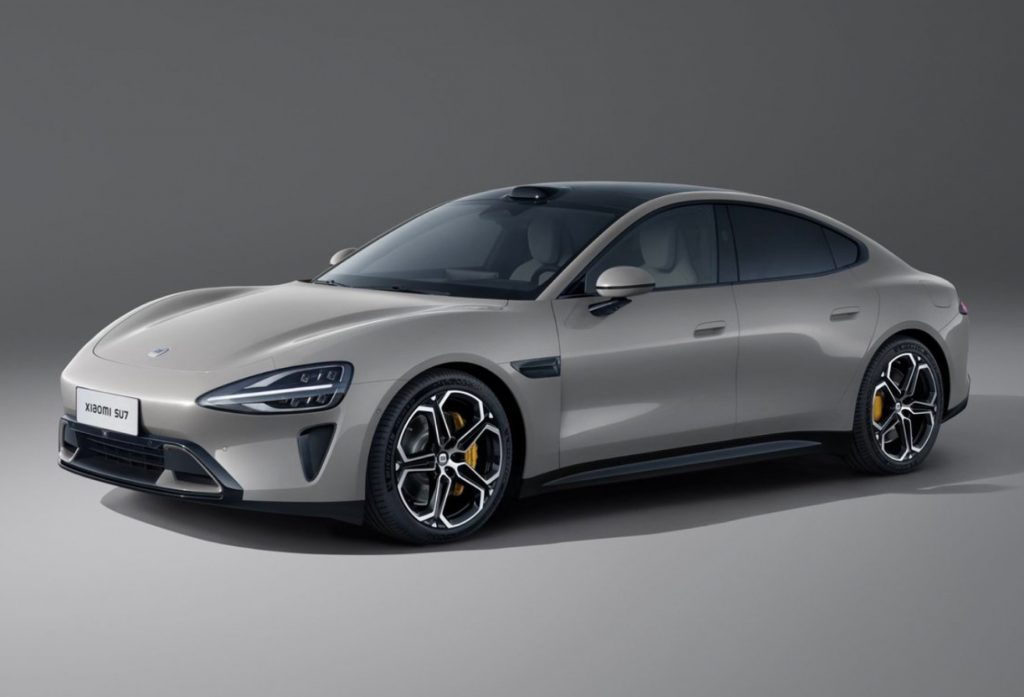
Like Volkswagen, Xiaomi already knows that car owners still prefer to have some physical buttons, so it kept some for climate control, as well as two extra buttons – one for activating the spoiler (Lei mentioned that this has done more for show) and one for body height adjustment. You can also get an optional row of buttons placed below the center display. The SU7 will also have autonomous driving capabilities, thanks to the Xiaomi Pilot platform powered by up to two NVIDIA Drive Orin processors (the base model only has one) and an array of sensors. These include a top-mounted Lidar with a visual range of up to 200 meters and a pixel accuracy of up to 0.1 meters. According to the company the latter means better detection of thinner and smaller obstacles.
In a series of demonstration videos, Xiaomi showed how the SU7 could navigate a busy road with mixed obstacles, as well as perform self-parking, even in a robotic parking lot with tight spaces. Xiaomi also claims that the SU7’s sensors can handle both snowy and rainy climates, another optimistic claim that remains to be seen. Lei added that his company aims to complete self-driving tests in 100 cities in China by the end of 2024, although it is unclear how soon local authorities will give permission for self-driving nationwide.
In addition to future software updates, Xiaomi also teased the upcoming HyperEngine V8 with a record 27,200 rpm, all housed inside a stronger silicon steel chassis to keep the engine under control. This is already ready for mass production, with plans to incorporate it into cars by 2025. The company then hinted at the future, where this includes a next-generation carbon fiber-based electric motor technology that will apparently be capable of 35,000 rpm. thin, something that is still far from commercial exploitation. Xiaomi has yet to announce pricing for the SU7 series, although Lei has already hinted that it will be expensive, which is always subjective.
We’ll find out in a few months, and then we’ll hopefully know about (if) availability outside of China as well. The possibility that this includes the US is, however, quite remote if not impossible. As part of the presentation, it was announced that Xiaomi 14, 14 Pro smartphones and the Xiaomi Watch S3 eSIM will be released in a limited edition in aqua blue and olive green colors, to match the upcoming SU7.

0 Comments