
Voyager 1 has regained its ability to transmit valuable data to Earth after a period of garbled signals.NASA’s Voyager 1 spacecraft, the most distant human-made object in space, has regained its ability to transmit valuable data to Earth after a period of garbled signals, the US space agency said yesterday.
To recap, the spacecraft had stopped sending intelligible data on November 14, 2023, although it was still receiving commands from ground control. But in a remarkable breakthrough this March, engineers at NASA’s Jet Propulsion Laboratory pinpointed a malfunctioning chip as the culprit and devised a clever software solution that worked within the limitations of the 46-year-old computer system. The Voyager 1 spacecraft is now relaying useful data about the status and functionality of the systems on board. The next goal is to continue the transmission of scientific data.
Voyager 1 was launched in 1977 and was humanity’s first spacecraft to enter interstellar space in 2012. Today it is over 15 billion miles from Earth. Signals traveling from Earth to Voyager 1 take about 22.5 hours to reach their destination.
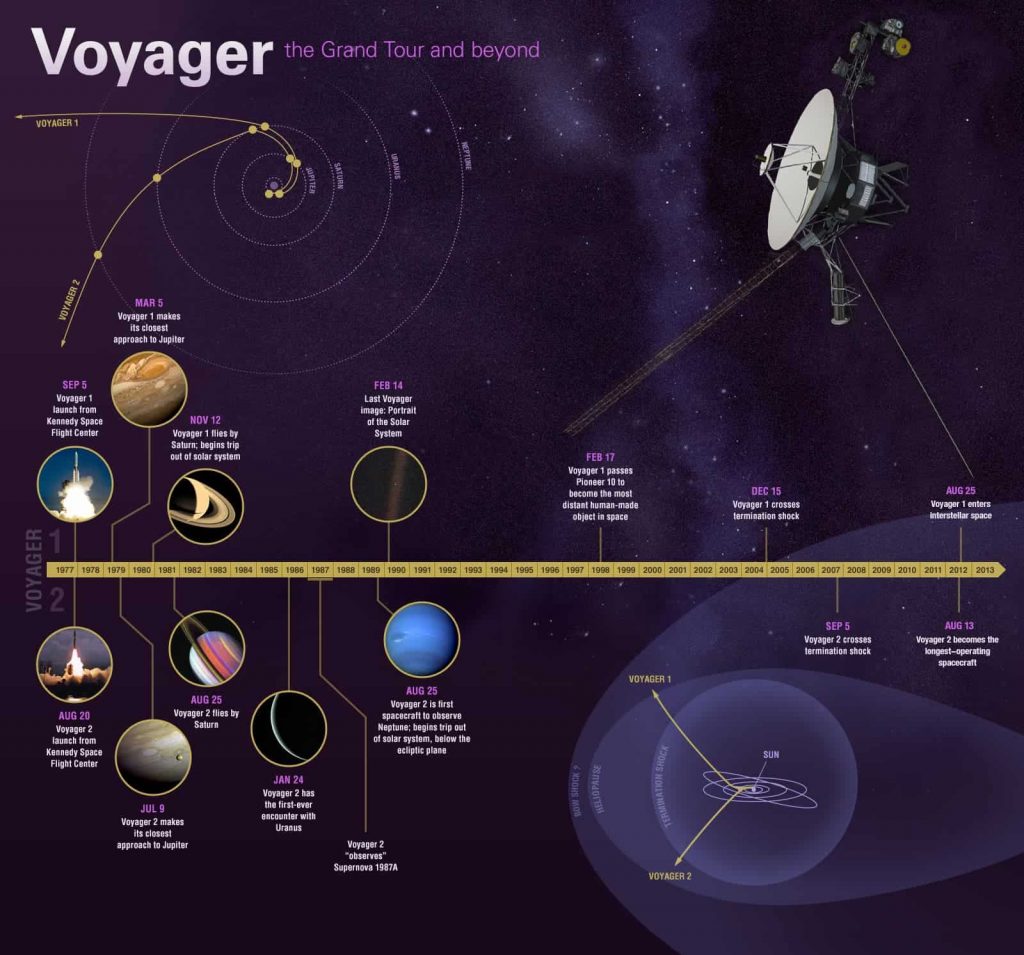
Voyager 2, its companion that launched the same year, also left the solar system in 2018. The two Voyager probes carry “Golden Discs,” 12-inch copper-plated discs designed to relay information about Earth to potential alien civilizations. These discs include a map of the solar system, a radioactive sample of uranium for dating, and symbolic instructions on how to access their contents. Curated under the guidance of astronomer Carl Sagan, the discs contain encoded images of life on Earth and a selection of music and sounds.
Both probes are expected to run out of power by the mid-2020s. After that, they will continue their journey through our Galaxy, possibly indefinitely, silently exploring the universe.
0 Comments