
On this day, August 24, 2006, the International Astronomical Union made a decision that was going to change our solar system as we know it today. In particular, Union members voted on a proposal that had been introduced for many years that defined exactly what astronomers mean by the term planet.
And yet there is alien life on Venus This resulted in Pluto losing planet status and thus reducing the number of planets in our solar system to eight. And yet, 17 years later the proposal remains as controversial as ever. According to the LFLscience website, the Union looked at several definitions before settling on one, which would include planets around other stars, exoplanets, or planets that have left their star system.
However, questions were raised about so-called orphan planets, i.e. planets that have been ejected from their star system. Finally, its new definition was decided. Dwarf planet. A planet should meet three basic conditions to be classified as a planet. To revolve around the sun To have hydrostatic balance, i.e. to be approximately spherical To have determined its orbit, being the main gravitational body. Pluto has in short ceased to be a planet, as it does not satisfy the third condition of the definition. That is, it has not determined its orbit, which it partly shares with Neptune.
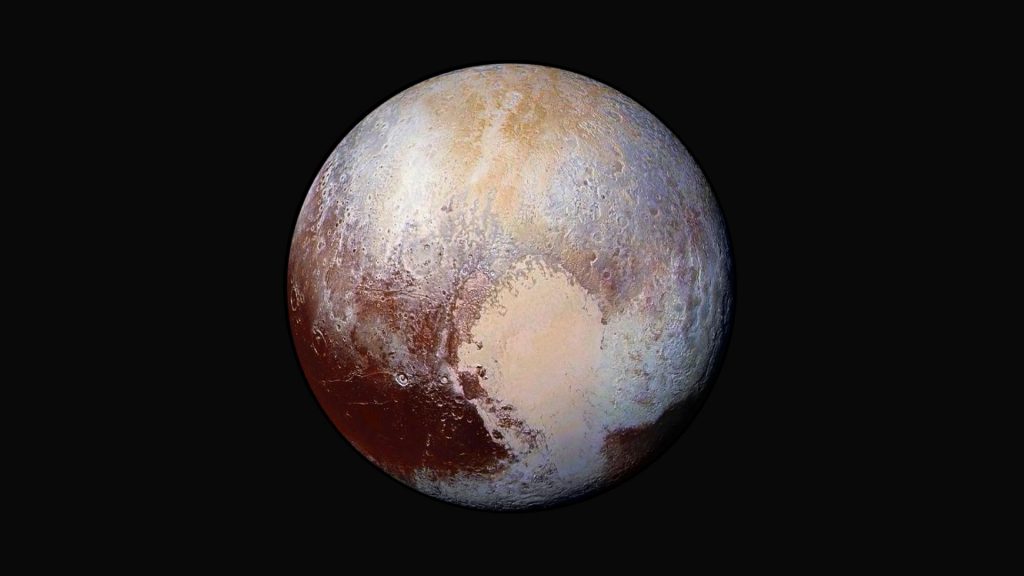
However, circles characterize the redefinition of Pluto as a dwarf planet as a demotion rather than a classification into a new species. The mystery of Pluto It’s worth noting, however, that there are many other things that make Pluto so strange.
For example, none of its five moons orbit the dwarf planet. Everything revolves around a point outside of Pluto, and Charon, its largest moon, appears to be responsible for this.
0 Comments